
Understanding Road Signs for New Drivers
Introduction
When you are learning to drive, road signs can feel like another language. There are so many shapes, colours, and symbols that it is easy to feel overwhelmed at first. The good news is that once you know the basics, recognising them becomes second nature.
If you live in or around Salisbury, you will see road signs everywhere – from the busy roundabouts near the A36 to the smaller roads around Wilton and Old Sarum. Learning what these signs mean will keep you safe, help you pass your driving test, and make you a more confident driver.
The Basics of Road Signs
Road signs are there to keep everyone safe and to make driving more organised. They give you important information about speed limits, road layouts, hazards, and rules you must follow.
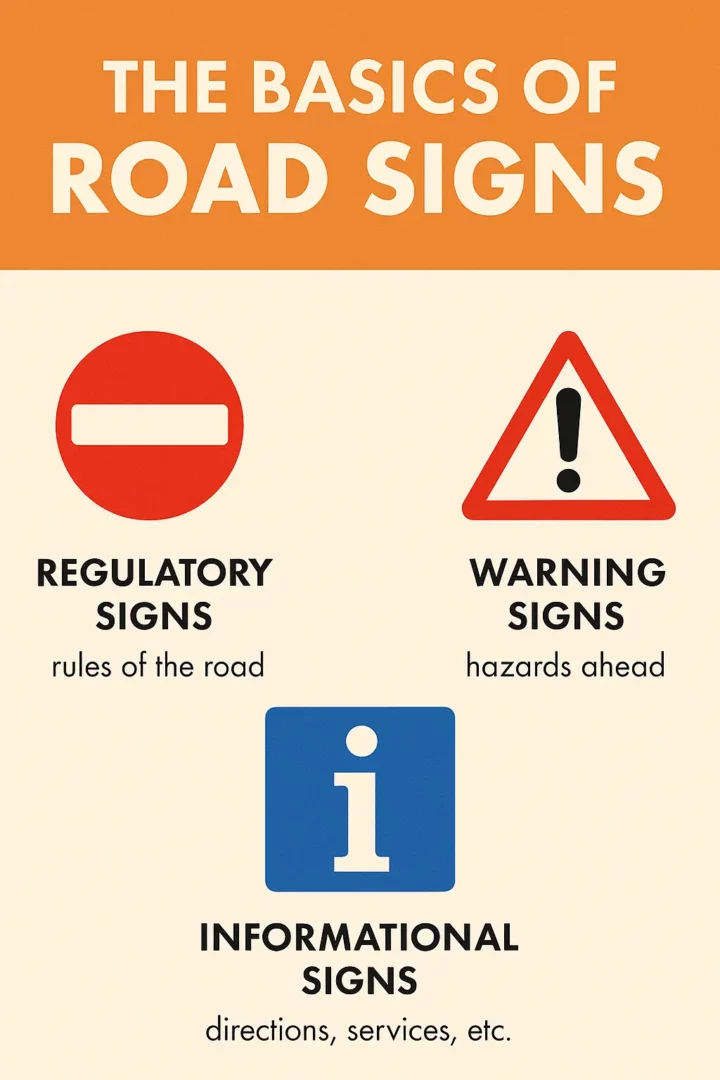
In the UK, most road signs fall into three main groups:
Regulatory signs – These are the rules of the road, such as speed limits, no entry, or turn left.
Warning signs – These let you know about hazards ahead, like sharp bends or pedestrian crossings.
Informational signs – These help you find your way, showing directions, services, and tourist spots.
Shapes and Colours – What They Mean
One of the quickest ways to understand road signs is to remember their shapes and colours.
Circles: Give orders
Red circles mean you must not do something (for example, no entry).
Blue circles tell you to do something (for example, turn left).
Triangles: Give warnings about hazards ahead.
Rectangles: Give information or directions (blue for motorways, green for main routes, white for local routes).
A simple rule to remember: red means danger or stop, blue means positive instructions, green means direction.
Common Road Signs Every New Driver Should Know
Here are some of the signs you will see most often when driving in Salisbury and across the UK:
Speed limit signs – A number inside a red circle, like 30 or 40 mph.
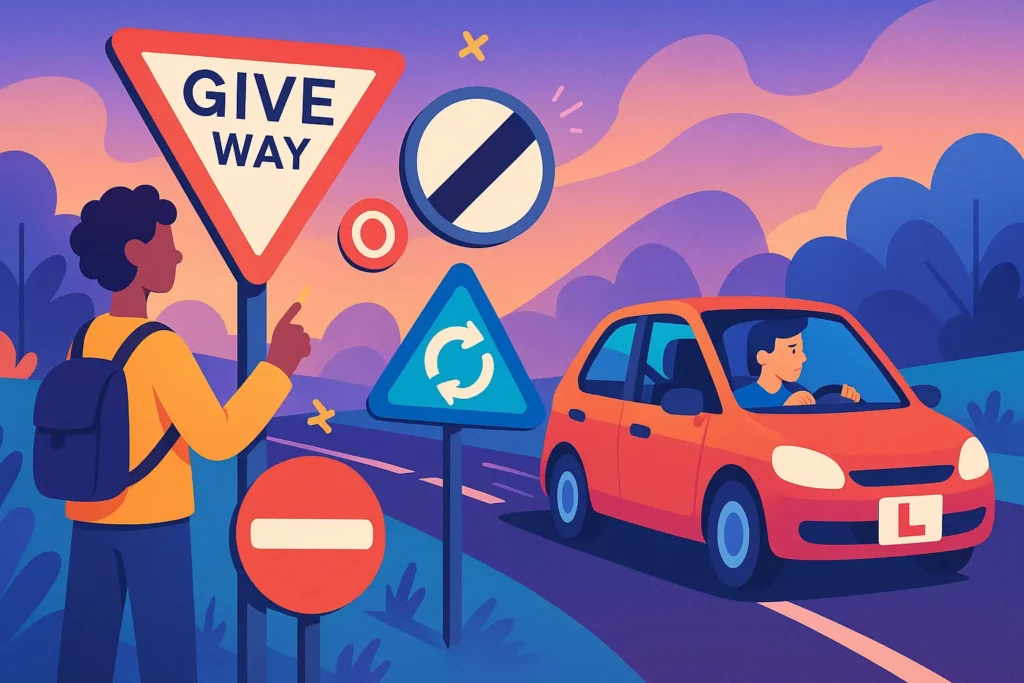
Give Way signs – An upside-down white triangle with a red border.
Stop signs – A red octagon with the word STOP in white letters.
No entry signs – A red circle with a white horizontal bar in the middle.
Pedestrian crossing signs – Blue signs or flashing amber beacons warning of zebra or pelican crossings.
Roundabout signs – Blue circles with three white arrows in a circle, often seen at Salisbury’s A338 and A36 junctions.
School zone signs – A triangular sign showing children, often near schools like South Wilts Grammar or Bishop Wordsworth’s.
Tips for Remembering Road Signs
Group them by shape and colour – This helps you guess the meaning even if you do not remember the exact sign.
Use flashcards or apps – The DVSA Theory Test app is very useful.
Practice as a passenger – Look out for signs when someone else is driving and quiz yourself.
Learn on real roads – Your driving lessons around Salisbury will give you plenty of real-life practice.
Road Signs You Might See on the Driving Test
When taking your test in Salisbury, you might encounter:
Temporary roadworks signs around the city centre or on the A36
Height or weight limit signs on smaller rural roads
Signs for mini-roundabouts near Laverstock or Bemerton Heath
Clearway and no stopping signs in busier areas
Examiners expect you to recognise these instantly and react safely without hesitation.
The Legal Side of Road Signs
Following road signs is not optional – it is the law. Ignoring them can lead to:
Fines
Penalty points on your licence
Accidents that cause injury or damage
The Highway Code sets out the meaning of every road sign in the UK. It is worth reviewing regularly, even after you pass your test.
Conclusion
Understanding road signs is one of the foundations of safe driving. By learning the shapes, colours, and common meanings, you will find it much easier to spot them on the road.
If you are learning to drive in Salisbury, our local instructors know the routes and the signs you are most likely to see on your test. We can help you prepare for both the theory and practical parts of learning to drive.
Ready to get started? Contact us today to book your driving lessons and get one step closer to passing your test with confidence.